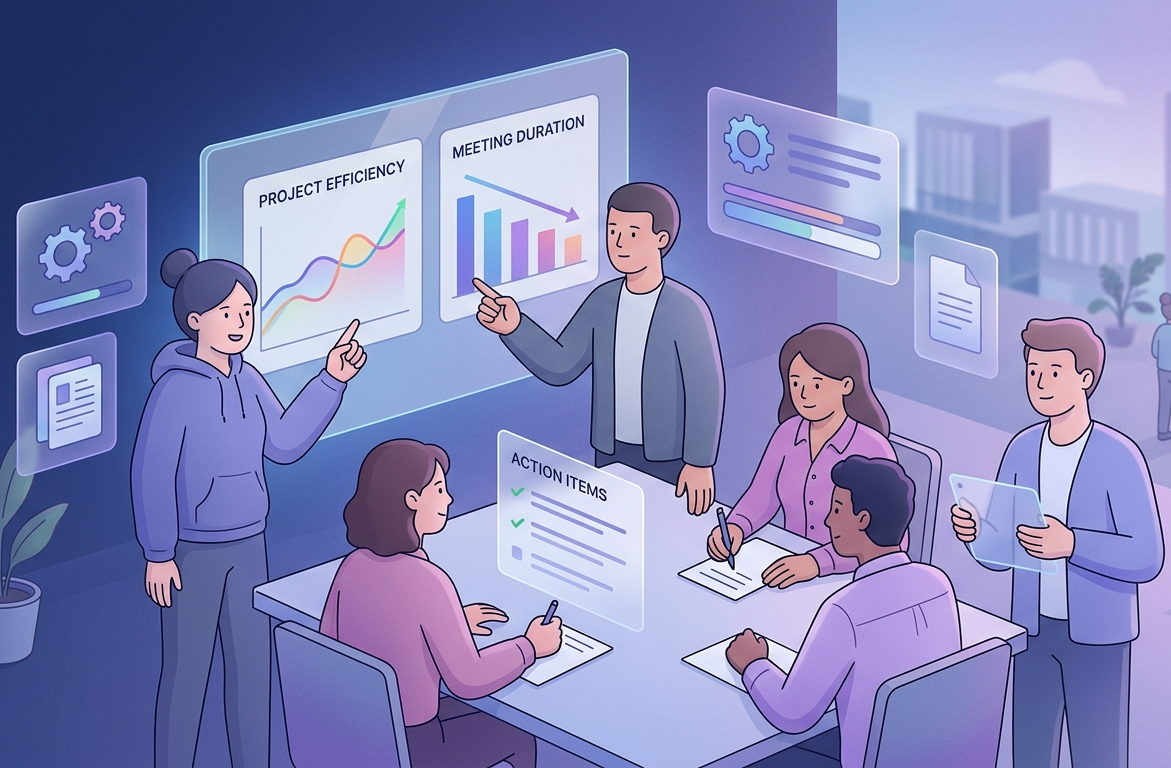
How High-Performing Teams Run Effective Meetings (And Stop Wasting Time)
Meeting overload is quietly eroding productivity across modern workplaces. Knowledge workers regularly spend up to 23 hours a week in meetings, which is more than half their working hours. Yet a significant portion of those sessions fail to produce clear decisions or tangible outcomes.
When meetings default to passive status updates or open-ended conversations without a clear leader, momentum stalls. Context shifting multiplies, focus time disappears, and team members end up staying late just to complete their actual work.
High-performing teams do not eliminate meetings entirely. Instead, they treat real-time synchronous time as a high-value resource. They establish clear operational standards that govern when to meet, how to facilitate, and how to capture decisions. Here is how your team can shift from low-yield gatherings to a tight, high-alignment meeting cadence.
The True Cost of Defaulting to Synchronous Time
Every meeting carries an invisible operational cost. A one-hour meeting with six team members does not cost one hour. It costs six hours of collective working time, plus the energy required to refocus on main projects afterward.
Unstructured meetings generally suffer from two main flaws: using live time for routine status reporting or allowing open-ended discussions with no named decision-maker. Both paths lead directly to fragmented focus, meeting fatigue, and execution bottlenecks.
When teams use live meetings primarily to share general updates, they misuse live time. Simple information sharing is handled far more efficiently through written communication.
Live meeting time should be reserved for scenarios that truly require collaboration: complex problem-solving, difficult trade-offs, or strategic planning. If a topic can be resolved via a shared document, a quick message, or a brief recording, holding a full meeting is an unnecessary time sink.
The Three Rules of Pre-Meeting Architecture
Effective meetings are won or lost long before the calendar invite is sent. High-performing organizations enforce three foundational criteria before any meeting is scheduled.
1. The Agenda Must Be Goal-Driven
Never send a meeting invite with a vague topic like "Weekly Sync" or "Project Update." Frame every agenda item as a concrete decision or specific problem statement.
- Weak Agenda: Discuss new project ideas.
- Effective Agenda: Choose between Proposal A and Proposal B based on budget limits and timeline benchmarks.
2. Required Pre-Reading with a Silent Read
If participants need context to contribute, deliver written background materials at least 24 hours in advance. High-performing teams often dedicate the first 5 to 10 minutes of the meeting to a silent read. This allows everyone to review the document and note questions before discussion begins. It ensures everyone starts with identical context regardless of how busy their day was before the call.
3. Strict Participant Selection
Limit attendees to those who fall into two categories: individuals required to make the decision, and individuals directly responsible for executing the outcome. Anyone who simply needs to stay informed should receive the meeting notes afterward rather than attending live.
Facilitation Strategies That Drive Action
Once a meeting begins, strong facilitation keeps the team focused on solving the problem at hand rather than drifting into unrelated topics. The ideal flow moves deliberately from setup to active management and then straight to post-meeting execution.
Assign Explicit Roles
Every effective meeting requires two distinct roles:
- The Facilitator: Manages the clock, keeps the conversation focused on the agenda, and ensures everyone has a voice without letting any single person dominate.
- The Scribe: Captures core ideas, key decisions, and explicit action items directly in a shared workspace in real time.
Establish a Parking Lot Protocol
Off-topic ideas naturally pop up during discussions. Rather than allowing side topics to hijack the meeting, the facilitator should direct them to a designated parking lot document. These items are written down, assigned to someone for follow-up, and skipped so the group can return to the main goal.
Default to 25-Minute and 50-Minute Blocks
Avoid standard 30 or 60 minute calendar default settings. Scheduling meetings for 25 or 50 minutes provides a brief breather for attendees to process notes, take a break, and transition smoothly into their next task.
Replacing Status Meetings with Asynchronous Protocols
The fastest way to reduce calendar clutter is eliminating recurring status updates. Status meetings often suffer from low engagement because individual updates rarely matter to every person in the room.
Asynchronous communication works best for routine progress reports, metric updates, minor announcements, and document reviews. The best channels for these are team chat channels, shared project boards, or short video recordings.
Live meetings should be saved for strategic alignment, creative brainstorming, team retrospectives, and key project launches. These scenarios benefit directly from real-time conversation and group input.
To transition to an asynchronous update model:
- Require team members to post written updates at set times covering completed work, upcoming tasks, and current blockers.
- Use short screen recordings to present concepts or give tours of new materials instead of hosting live presentations.
- Address blockers through message threads, holding a brief 10-minute touchpoint only when a complex issue requires immediate discussion.
Common Meeting Mistakes to Avoid
Even well-intentioned teams fall into common habits that ruin meeting quality over time:
- Ending Without Clear Action Items: Never end a call with vague statements like "We will look into that." Every decision must be tied to a specific action item, a single owner, and a clear deadline.
- Treating Calendars as Public Real Estate: Automatically accepting every meeting request leads to a fragmented day. Encourage team members to block out quiet focus time and protect those focus blocks consistently.
- Failing to Audit Recurring Meetings: Recurring syncs easily turn into empty habits. Conduct a bi-monthly calendar review. Evaluate every recurring meeting, measure its value, and cancel or shorten anything that no longer serves a clear purpose.
Key Takeaways
- Reserve live time for high-value collaboration: Use meetings for active decisions and team alignment, not routine status updates.
- Require goal-driven agendas and pre-reading: Never meet without a clear goal and advance context.
- Facilitate actively and capture decisions live: Appoint a facilitator to keep discussions on track and a scribe to record key outcomes as they happen.
- Enforce post-meeting accountability: Ensure every decision leads to an action item assigned to one person with a set deadline.
- Audit recurring meetings regularly: Review recurring calendar invites every two months to protect team focus time.
Take the Next Step for Your Team
Running effective meetings and staying aligned requires a single place where communication and action come together. Learn how Polaris combines real-time chat with integrated task management, making it easy to schedule focused meetings, coordinate agendas, and instantly convert discussion outcomes into actionable tasks.
--> Try Polaris Today