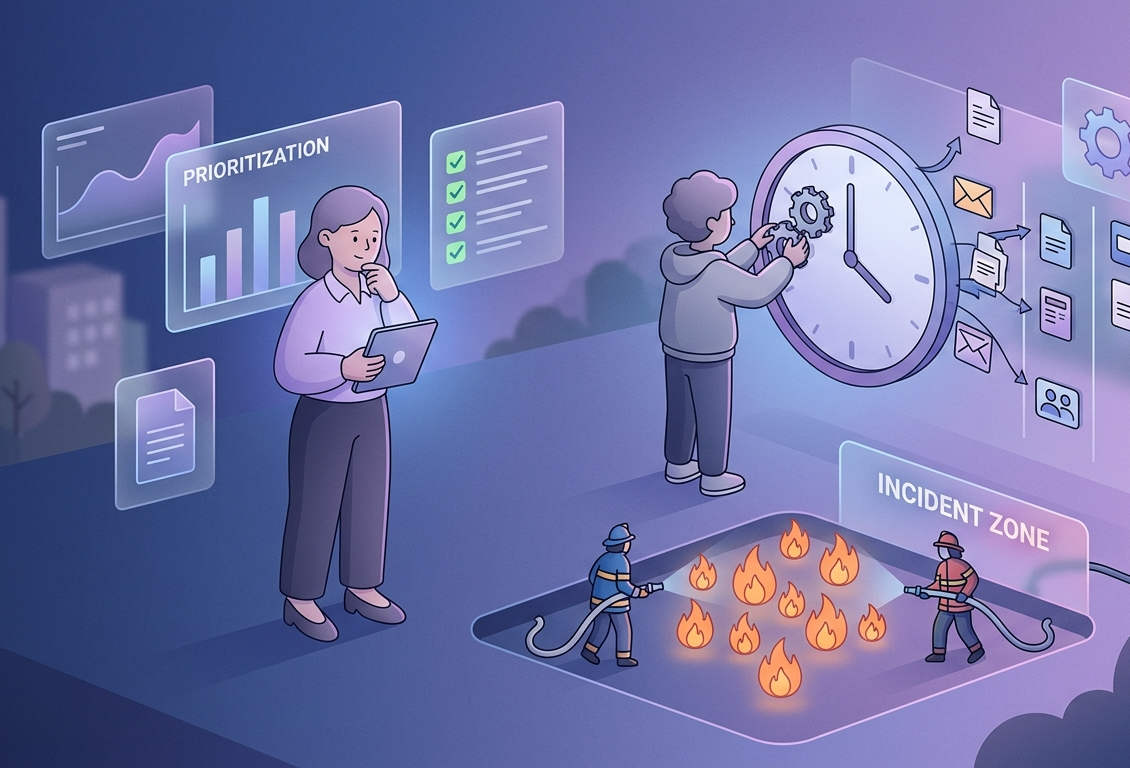
Many teams begin each day with the best intentions. They have a plan, a list of priorities, and a clear idea of what they hope to accomplish. Yet by the end of the day, those plans have often been replaced by urgent requests, unexpected meetings, production issues, and last-minute changes. Instead of making meaningful progress toward long-term goals, the team spends its time responding to whatever demands immediate attention.
This pattern is commonly described as firefighting. While occasional emergencies are inevitable in any organization, operating in a constant state of reaction is rarely a sign of productivity. More often, it indicates that priorities are unclear, workflows lack structure, or important work is repeatedly being displaced by urgent work.
Learning how to prioritize effectively allows teams to regain control of their time. Rather than asking, "What should we do next?" every few hours, they develop systems that consistently direct attention toward the work that creates the greatest value.
Why Everything Starts to Feel Urgent
One of the biggest challenges in modern work is that urgency is highly visible, while importance is often invisible.
An unanswered message creates immediate pressure. A customer complaint demands attention. A notification appears, a meeting is scheduled, or someone asks for a quick favor. These interruptions naturally capture our attention because they require an immediate response.
Strategic work, however, rarely announces itself in the same way. Improving internal processes, documenting systems, planning future releases, or reducing technical debt may have a much greater long-term impact, but they seldom feel urgent in the moment.
Psychologists describe this tendency as urgency bias, our natural inclination to prioritize tasks that appear time-sensitive over those that are genuinely more important. Left unchecked, urgency bias gradually shifts an organization's attention away from meaningful progress and toward constant reaction.
The Cost of Constant Firefighting
Working reactively carries costs that extend far beyond missed deadlines.
When priorities change throughout the day, people spend significant mental energy deciding what deserves attention. Frequent context switching interrupts concentration, making even simple tasks take longer to complete. Over time, this constant adjustment contributes to decision fatigue, reduces productivity, and increases workplace stress.
Projects also become less predictable. Important initiatives are repeatedly postponed because new emergencies continue to emerge, creating a cycle where delayed work eventually becomes tomorrow's urgent problem.
Ironically, constant firefighting often creates the very emergencies teams are trying to avoid.
Prioritization Is About Decisions, Not Lists
Many people think prioritization simply means arranging tasks from top to bottom. In reality, prioritization is the process of making deliberate decisions about where limited time, attention, and resources should be invested.
Every organization has more potential work than it can complete. The goal is therefore not to do everything, but to consistently choose the work that contributes most to the organization's objectives.
Effective prioritization answers questions such as:
- Which tasks create the greatest impact?
- What work is blocking others?
- Which deadlines genuinely matter?
- What can wait?
- What should not be done at all?
Without clear answers to these questions, teams often confuse activity with progress.
Practical Frameworks for Prioritizing Work
No single prioritization method works for every team. However, several proven frameworks help organizations make more consistent decisions.
1- The Eisenhower Matrix
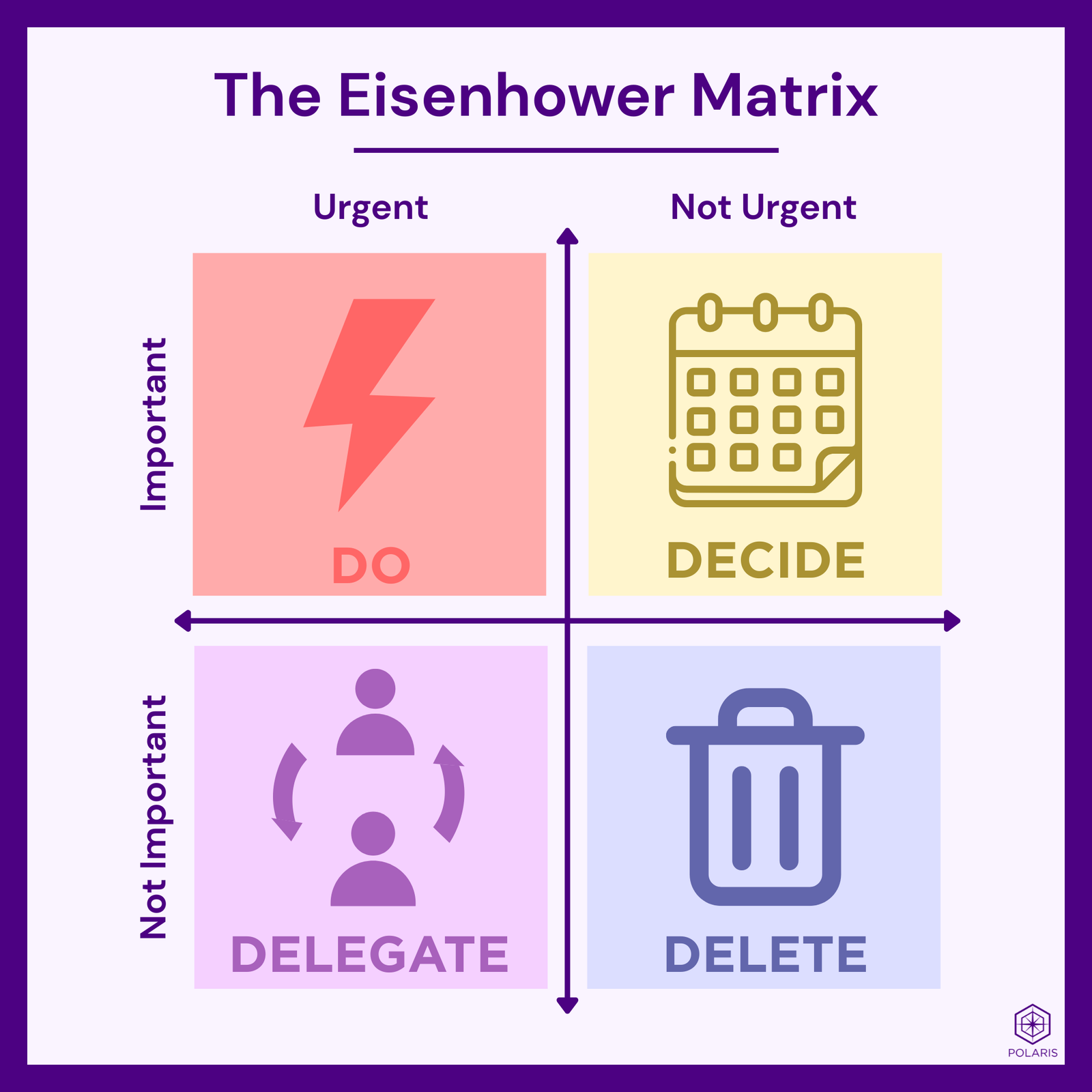
One of the simplest approaches separates work into four categories based on urgency and importance.
Tasks that are both urgent and important deserve immediate attention. Important but non-urgent work should be scheduled before it becomes a crisis. Urgent but less important work can often be delegated, while tasks that are neither urgent nor important should be minimized or eliminated altogether.
The strength of this framework lies in helping teams recognize that urgency and importance are not the same thing.
2- The Impact vs. Effort Matrix
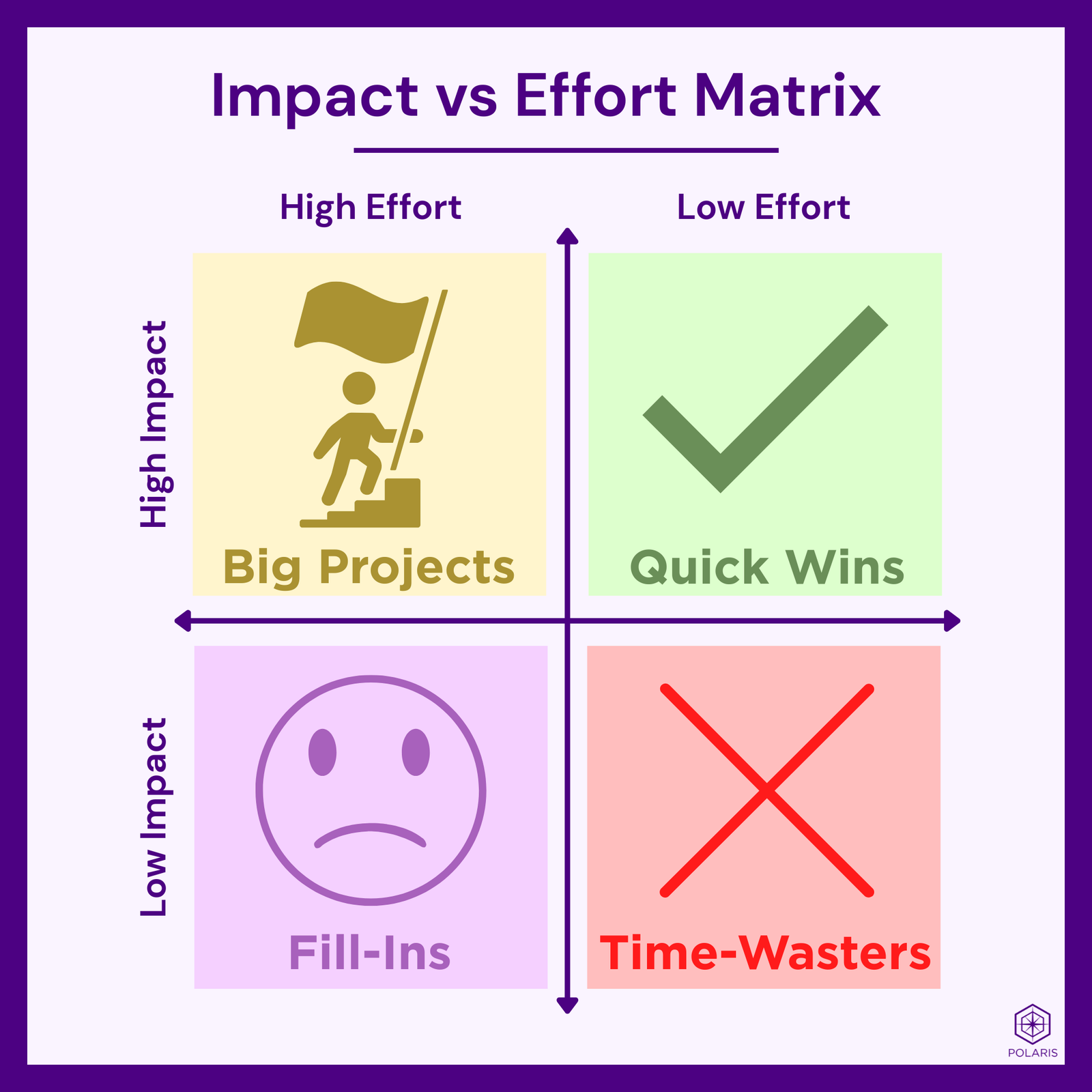
Some tasks require significant effort while producing little value. Others deliver substantial benefits with relatively little investment.
Comparing expected impact against required effort helps teams identify opportunities that produce the greatest return on their time and resources.
This approach is especially valuable when deciding between multiple improvement initiatives or feature requests.
3- Prioritize Dependencies
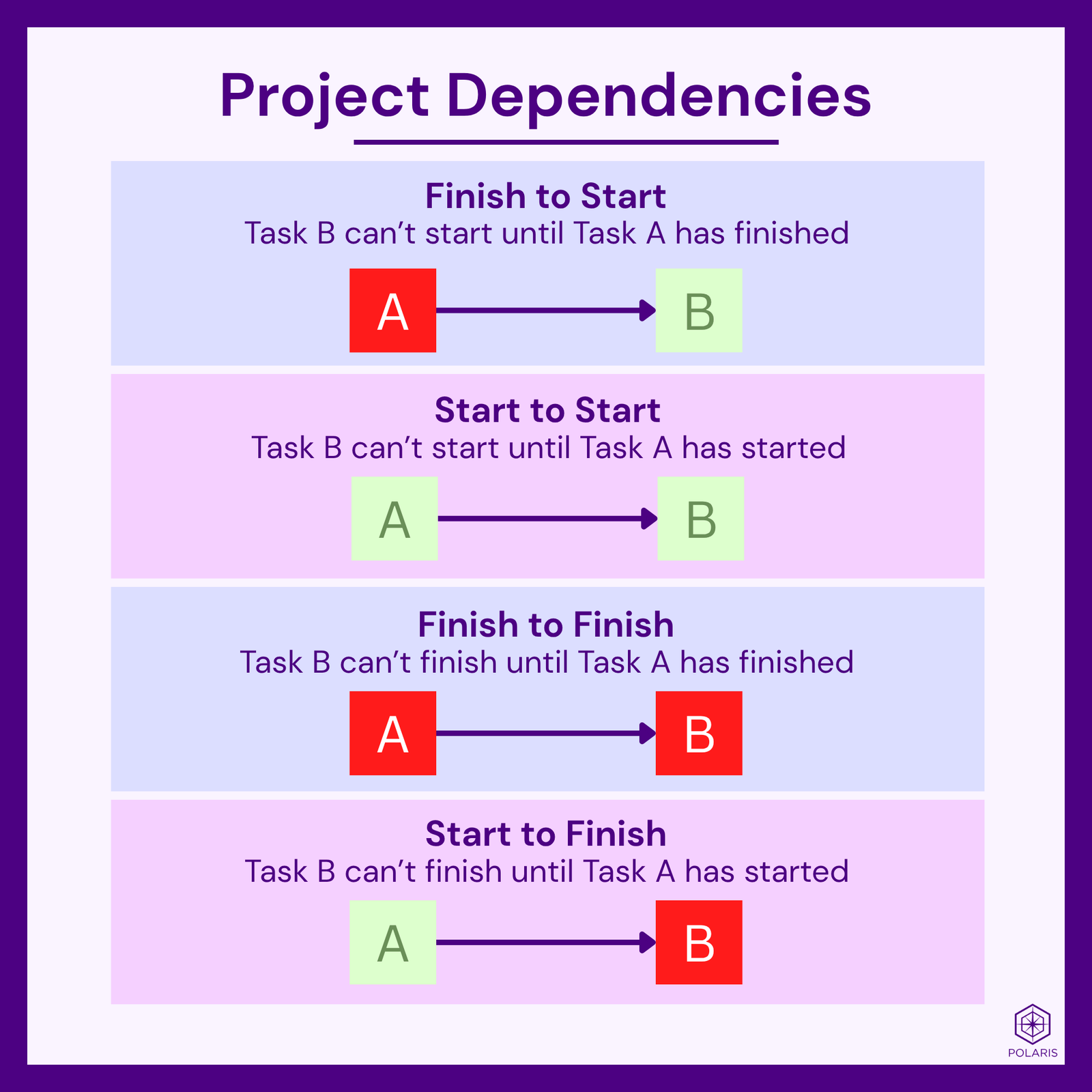
Not every important task is valuable because of its own outcome. Some tasks are important because they enable other work to begin.
Identifying these dependencies prevents bottlenecks from slowing an entire project. Completing one enabling task may allow several team members to continue their work simultaneously, creating far greater value than completing an isolated task.
4- Review Priorities Regularly
Prioritization is not a one-time exercise completed during project planning.
Business priorities change, customer needs evolve, and unexpected risks emerge. Reviewing priorities on a regular basis allows teams to adapt without abandoning long-term objectives.
The goal is flexibility, not constant change.
Building a Prioritization Culture
Successful prioritization depends as much on organizational culture as it does on frameworks.
Teams should understand not only what they are working on but why it matters. When priorities are communicated clearly, individuals make better day-to-day decisions without waiting for constant direction from managers.
Leaders also play an important role by protecting focused work from unnecessary interruptions. If every request is treated as urgent, employees quickly learn that planning has little value because priorities will change anyway.
A healthy culture acknowledges that saying yes to one task often means saying no to another.
How Visibility Supports Better Prioritization
Prioritization becomes significantly easier when teams have visibility into their work.
When managers can see deadlines, workloads, dependencies, and project progress in one place, they can make informed decisions based on facts rather than assumptions. Hidden bottlenecks become visible before they become emergencies, while overloaded team members can be identified before burnout affects delivery.
Visibility also creates alignment. Instead of each department defining its own priorities independently, everyone works from a shared understanding of what matters most.
This is one of the reasons project visibility and prioritization are so closely connected. It is difficult to prioritize effectively when the current state of work is unclear.
Common Prioritization Mistakes
Even experienced teams can fall into habits that undermine effective prioritization.
One of the most common mistakes is treating every request as equally important. When everything receives the highest priority, priorities effectively disappear.
Another mistake is confusing busyness with productivity. Completing dozens of low-impact tasks may create a satisfying sense of accomplishment while delaying work that actually determines project success.
Finally, many organizations fail to reserve time for strategic work. Continuous focus on today's problems leaves little opportunity to prevent tomorrow's.
Final Thoughts
Effective prioritization is not about completing more work. It is about consistently choosing the right work.
Organizations that escape constant firefighting do so because they establish clear priorities, review them regularly, communicate them openly, and support them with systems that make work visible across the entire team.
Urgent work will always exist. The goal is not to eliminate it, but to ensure it no longer dictates every decision.
When teams prioritize deliberately instead of reacting constantly, they create the space needed for meaningful progress, sustainable productivity, and better project outcomes.
Turn Priorities into Progress
Clear priorities require more than good intentions, they require visibility. When tasks, deadlines, dependencies, and workloads are scattered across multiple tools, deciding what matters most becomes far more difficult than it should be.
Polaris helps teams organize work, visualize priorities, and keep everyone aligned around what truly moves projects forward. Instead of reacting to the loudest request, your team can focus on the work that creates the greatest impact.
Discover how Polaris helps teams prioritize with confidence.